
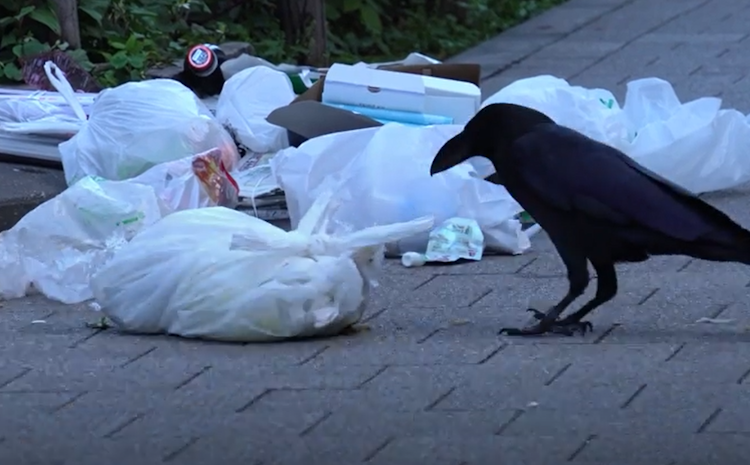
Birds reclaim McDonald’s wrappers… and here’s what they do with them, according to a recent study.
Why do birds reclaim our plastic packaging
This study investigated the question. They have apparently adapted to the abundance of waste in cities. A recent study shows how plastic food packaging is reused by birds.
Even though American cities such as Columbia are committed to reducing the amount of litter left on sidewalks and in nature, the problem persists. McDonald’s food cartons, chocolate bar wrappers, bags, papers, straws: all sorts of waste end up scattered in our streets.
Sturdier Nesting Sites Than with Plants
Birds, initially indifferent to this garbage, except for the food they might find, have gradually developed the habit of recycling it for their own use. A study published in Ecology (the journal of the Ecological Society of America) in February 2025 summarizes this behavior. The study’s lead author is biologist Auke-Florian Hiemstra of Leiden University in the Netherlands, a specialist in animal architecture.
This researcher observed that artificial materials, such as food-grade plastics, are frequently used by birds. He focused one of his studies on the Eurasian coot, a waterfowl. This bird typically built its nest with biodegradable plant materials and renewed the process annually. However, now the use of plastics and other more durable artificial materials for nest construction can lead to the emergence of new behaviors, including the reuse of nests from previous years.
The Rokin Nest: Over 600 Packaging Items Found
One of the most remarkable nests observed by the researcher is located on the Rokin Canal, near Amsterdam, Netherlands. Nearly 635 different types of litter were found inside, half of which were food-related. Plastic materials dating back to the 1990s were also collected.
The study focused on the information on the packaging to obtain more details, particularly regarding the product’s year of manufacture. Among other things, Mars bar wrappers from 2004, French fry bags, and, most notably, COVID-19 face masks dating from the pandemic were found. The researchers observed the addition of new materials over the years. Thanks to product expiration dates, successive nesting “phases” can be identified: 1996, 2004, 2012-2014, and 2018-2022.
Auke-Florian Hiemstra points out that older debris can resurface and be used by birds much later, like this bag of paprika chips dating back to the 1970s!
McDonald’s meals, a nest-building material
This also helps identify the brands most frequently reused by birds. McDonald’s is one of the most polluting companies, and nearly half of the datable products in our Rokin nest were manufactured by this brand, the study reports. Non-food waste is also used, such as a condom.
It remains to be seen why birds choose these materials for their nests. Is it because of the packaging’s durability? We don’t know if nest reuse is encouraged because of these advantages, or because of the scarcity of good urban nesting sites, the author concludes.
How to better recycle food packaging
Effective food packaging recycling begins with knowing what kinds of materials your local recycling system accepts. A great many items, clean paper, cardboard, metal cans, and certain plastics among them-are widely recyclable, but only if they’re free of food residue. Lightly rinse containers to remove residual food; even small amounts of grease or sauce can contaminate entire batches of recyclables. Cardboard stained with oil, like used pizza boxes, can be torn into clean and dirty sections, sending only the clean portions to the recycling bin.
Sorting correctly is equally important. Learn the recycling symbols on plastic packaging, and focus on the types your community actually processes. Avoid wish-cycling, or placing items in the bin in hope that they’re recyclable, this often causes more harm than good. Flexible plastic films, chip bags, and wrappers typically require special drop-off recycling programs, not curbside bins.
Reducing and reusing also strengthen the recycling loop. Choose products sold in minimal or recyclable packaging, and opt for reusable containers whenever possible. Buying in bulk can greatly help reduce single-use waste. Use a dumpster rental service if you have a lot of junk to discard at once!
Lastly, stay informed. Check your municipality’s latest guidelines and take part in community recycling initiatives. Small, consistent actions make the whole system more effective and significantly lessen the environmental impact caused by food packaging.